Thursday, November 22, 2012

A Street by Any Other Name


By Patricia Winton

Piazza della Repubblica, Rome
Visitors to various Italian cities soon learn that street and piazza names are often linked to important dates in Italian history. One of the most popular piazza names Piazza della Repubblica comes from June 2, 1946, when Italy declared itself a republic following World War II. Piazza Esedra in Rome was rechristened Piazza della Repubblica in 1960 in honor of the Rome Olympics. Other streets and piazzas named for dates that recur throughout Italy include:

Via II Giugno, like Piazza della Repubblica, also recognizes the anniversary of the referendum vote that ousted the monarchy and established Italy as a republic. It’s also marks the first time women in Italy voted. The day is a public holiday.

Via XX Settembre, Gneova, Photo by Renahx
Via XX Settembre commemorates the date in 1870 when Rome was finally captured to unify Italy as one nation and eliminate the government domination by the Pope. The first Via XX Settembre is in Rome marking the point where the wall was breached (Read about this event in my Novel Adventurers post.). Many streets previously named for popes were rechristened Via XX Settembre. The original street in Rome, for example, had been named Via Pia (for Pope Pius).

Via VII Ottobre 1492 marks the day Christopher Columbus made landfall in the Caribbean, believing he had reached the East Indies. Often celebrated as the day Columbus discovered America. While Columbus (Cristoforo Colombo) began his explorations in Spain, he is honored as a son of Italy. His home town of Genova is one of several towns with this street name.

Via XXV Aprile celebrates the day in 1945 when the Nazis surrendered their last stronghold in northern Italy and Benito Mussolini’s government dissolved in Rome. The day is celebrated as Liberation Day in Italy, a public holiday.

Via XXIV Maggio marks the day in 1914 when Italy entered World War I. While it’s not celebrated as a holiday, several Italian cities bear this street name, including Pisa, Salerno, and Porto Viro, near Venice.

Via IV Novembre is represented in more Italian cities, observing the day in 1918 when Italy and Austria-Hungary ended hostilities, ending the Italian campaign in World War I. Rome, Como, and Bologna, among others, have streets named for this anniversary.

Italian street names commemorate great warriors, from ancient Rome to unification to the World Wars. They honor saints and cities and scientists. They revere heroes from other countries, like Rome’s Viale Washington George. In Rome, there’s even a Piazzale degli Eroi, Little Piazza of the Heroes. But I find the street names dedicated to dates to be the most curious.

Thursday, November 8, 2012

Remembering Rosemary


By Patricia Winton 

 There's rosemary, that's for remembrance.... 
    Ophelia in Othello                                

I first encountered rosemary in a little red, white, and blue metal container. It didn’t—and doesn’t still—sit on my mother’s spice rack. When I opened my own kitchen, I began widening my culinary horizons, and rosemary became an early experiment. I hate to admit it, but I produced the worst meatballs ever to be consumed by humankind, and my enthusiasm for rosemary cooled considerably…until I first came to Italy and encountered it fresh.

I visited my friends John and Enzo in the village of Riparbella, not far from the Etruscan town of Volterra. Enzo prepared roast chicken by sticking slivers of garlic into the flesh, placing more garlic, half a lemon, and a large sprig of rosemary in the body cavity, and coating the skin with olive oil. He placed it in a large baking dish surrounded by quartered potatoes. These were coated with more olive oil and anointed with additional garlic and rosemary. My reaction to this dish was akin to Julia Child’s introduction to sole meuniére, her first meal in France. I’ve been a fan of fresh rosemary since. Variations of this dish still dominate the Italian dining table for Sunday lunch.

Rosemary, common throughout the Mediterranean, has long been an integral part of the culinary scene on the Italian peninsula. Archaeological evidence suggests that the Etruscans used rosemary to flavor their fish and meat as early as 700-300 BC. The Italian word rosemarino comes from the Latin ros marinus, meaning “dew of the sea.” The Romans spread the plant to England during their occupation, although it needs protection from the cold in that climate, and Italians took it with them to the Americas when they emigrated there.

When I returned to the U.S. after that first experience here, I grew rosemary myself. It can survive outdoors in the Washington area, and rosemary graced my community garden for ten years. When I left the garden, I transplanted it (with the owner’s permission) to an area behind the building where I lived. It was an enormous plant by this time, and I had to rent a car to transport it. It thrived that summer, and when winter came, I gathered sprigs to hang in my kitchen, but I always clipped a fresh bit for cooking. Imagine my horror the following spring when I went out to gather rosemary to find the gardener had hacked it down. More than ten years later, I still get an empty feeling when I think about it.

Here in Rome, I have rosemary in a pot on my fifth-floor terrace. I still haven’t gotten the knack for growing it in a container. Surprisingly, it doesn’t seem to like the summer sun, which is intense. But come autumn and winter, it will thrive again just in time for all those winter stews, roast chickens, and legs of lamb that I’ll enjoy.

Thursday, October 25, 2012

Pasta and Tuna


By Patricia Winton

I love tuna...and pasta. Together or separately. I eat them because I like them.

In Italy, yellow fin tuna is favored over the paler variety. It has a stronger flavor. I love to open a can packed in olive oil to make a summer salad. The tuna, drained, crumbled in a bowl with halved or quartered cherry tomatoes, black olives, and a bit of basil. And there’s tuna with cannellini beans, another summer salad with chopped red onion, drained beans, and tuna. Both are staples on my table all summer long. In winter, I cook with it.

Pasta. What can I say? Here on the boot it is noble fare, eaten stuffed or sauced, baked or boiled. It can be as simple as tangled strands of spaghetti with oil and breadcrumbs or as elaborate as linguini with shrimp and artichokes bathed in cream. The sizes and shapes are infinite. You could eat pasta every day for a year without repeating a recipe.

But put them together—pasta and tuna—and you reach perfection.  Here are two recipes fit for a dinner party, one with canned tuna and one with fresh. Both are elegant, the first for those with a thin purse, the other for those with a fat one.

Pasta with Tuna, Tomato, and Cream

1 pound dried pasta (if the package holds 14 ounces, that’s okay)
1 5-ounce can of tuna, drained  (Italians use a darker tuna than Americans)
8 ounces canned tomato sauce
1 cup heavy cream or half and half
1 medium onion, chopped
1 clove garlic, minced
¼ teaspoon cayenne pepper
2 tablespoons extra virgin olive oil
Salt and pepper to taste
¼ cup flat-leaf Italian parsley, chopped


1.    Put the oil in a frying pan and add the onion, garlic, half the parsley, and cayenne pepper. Sautè until the onions are soft.
2.    Add the tuna and stir a moment to mix.
3.    Add the tomato sauce and check for salt. Add more if needed.
4.    Let the sauce cook over a low flame until it has reduced to a thick paste.
5.    In the meantime, cook the pasta in boiling salted water until chewy and not too soft.
6.    Add the cream to the tomato-tuna sauce and stir to incorporate it. Taste and season with salt and pepper as desired.
7.    Drain the pasta, and add it to the sauce. Stir.
8.    Serve with a sprinkle of chopped parsley.

Serves 4.

Pasta with Fresh Tuna

12 ounces cavatelli, fusilli al ferro, or other short fresh pasta
½ pound tuna steak
½ pound cherry tomatoes
½ onion
1 ½ cups dry white wine
½ cup extra virgin olive oil
2 tablespoons pesto (see note below)
Salt and pepper to taste

Note: you may be able to find fresh pesto in a specialty shop; otherwise put this recipe on hold until spring.

1.    Wash and dry the tuna; cut it into small, even cubes
2.    Wash and stem the cherry tomatoes, and cut them into quarters.
3.    Peel and finely chop the onion
4.    Put the oil in a frying pan and add the onion; cook until soft and translucent.
5.    Add the tuna and let it brown on all sides.
6.    Bathe the tuna with the wine and allow it to cook over medium heat until evaporated.
7.    Add the cherry tomatoes, salt and pepper, and cook, stirring from time to time with a wooden spoon, for about ten minutes.
8.    Meanwhile cook the pasta, taking care not to let it get too soft.
9.    Drain, reserving a little of the starch-laden cooking water.
10.          Add the pasta to the sauce and stir.
11.          Blend in the pesto and enough of the cooking water to make the dish creamy.
12.          Let the dish set for a couple of minutes for the flavors to mingle and serve.

Serves 4


Thursday, October 11, 2012

The Socialization of the Italian Man


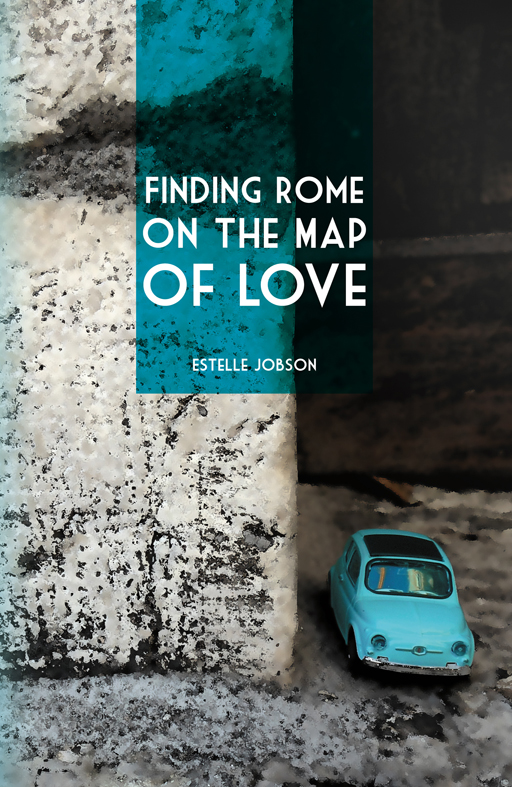
My guest today is Estelle Jobson. Estelle has more than a dozen years of experience in book publishing as well as a master's degree in publishing from New York University, which she attended on a Fulbright. She has done just about everything you can do with a book, except eat it. Estelle, who is South African, speaks five languages and has lived in as many countries. She now lives Geneva, where she works in communications, writes, edits and takes empowering naps. She is active in promoting women’s health. Her new book, Finding Rome on the Map of Love is available as an e-book from Amazon.

Excerpt from Chapter 3. The socialisation of the Italian man

When a dashing Italian man came tyres-asquealing into my life, he swept me off my feet and into his bed. Notwithstanding my already spinning head, I had a couple of double takes to do. Italian men were socialised differently. Starting with the male hairdo.

Certain features of my Italian boyfriend were elusive, yet significantly troublesome. For one, I strongly suspected his hair was blow dried. This was soon confirmed. Having never before dated a man who blow dried his hair, I had reservations. The debonair hairdo, combined with his kiwi fruit lip balm and pots of man’s eye cream – a mere drop in the ocean of his bathroom products – were perplexing.

Soon, while I was gossiping with my girlfriends about the blow drying business, they informed me that I was dating a ‘meterosexual.’ Now this species of man was something I had only formerly read about in the lifestyle section of the newspaper. Watching ruddy fellow South Africans watching him confirmed these speculations. Really, with his exquisite grooming and immaculate fingernails, he stood out like a stylish Italian lace-up amidst a mound of flip flops.

A relative newcomer on the sociology front, a meterosexual is roughly defined as such: a sensitive, sophisticated man who takes an interest in his appearance, his state of being and other matters refined (cuisine, the arts, fashion, his natty outfit and teeny espresso). At times it was difficult to differentiate which was what: meterosexual, male, the individual in question, or simply an Italian?

His explanation helped. ‘When you are small boy, your mamma call you before you go out to play with your friends,’ he said. ‘She call you over to check your clothes, your ‘air, your face is clean, she make sure you looka nice. Only then you can go and play houtside.’ After mamma’s lick, spit and polish, you’re free to rough and tumble with your mates.

This tweaking serves to foster a lifelong hair fetish and the national concern of fare una bella figura. To cut a fine figure, as one could translate it, means to make a good impression, to come across well to others. Based largely on one’s appearance, clothes and shoes, hair and accessories, the practice is paramount. More important, for example, than actually saying or doing something impressive.

The overall outcome of this bella figura concern is a highly groomed people. Truly easy on the eye are many Italian men: spiffy, manicured and coiffed, and yes, well, a trifle vain. Evidence suggests that vanity is no longer one of the Seven Deadly Sins. Behold how it thrives. Some men, well into their thirties, are still getting the once-over from mamma before they step out, albeit for different kinds of horseplay. These guys are called mammoni (mother’s boys).

Although growing taller by the century, Italians are generally still on the dainty side – the expression ‘bite-sized morsels’ springs to mind. Those gorgeous watches bedeck rather petite, if hairy, hands. Instead of Italian Stallions, the country is populated by clipclopping ponies. My meterosexual is on the petite side himself, slight in build and rather lean. By Italian standards, he is of medium height. He sports a chiselled chin, a decisive nose, delicious lips and a full head of springy curls. He’s not fully carpeted in black hair, fortunately, and I’m equally pleased to report that he has a decently large and masculine-sized...shoe, unlike troupes of his dainty-footed countrymen.

Some Italians are svelte and slim, others short and portly. Very many have wonderful aquiline noses, yet surprisingly few have sprouting nostril hair and more often than not, they’re cutting a pretty damn fine figure. In fact, some are breathtakingly hot. Something’s going right in the vanity department and I imagine it’s got a lot to do with...mamma.

You can visit Estelle on Facebook.